Offices blocks and mixed use buildings
Office space can be let floor by floor, a number of floors or part of a floor. If a building has a common heating system, then an EPC may be prepared for the whole building and used for any part when sold or rented out. Common areas are included in the calculation. Other separate dwellings within the block will each require their own domestic EPC.
Block with common heating system
If an office building has a common heating system, the seller or landlord should provide an EPC for the whole building (separate dwellings within the block will each require their own EPC). It is permissible to prepare an individual EPC for a part of a building if required. An EPC for a single unit or apartment may be based on an assessment of a similar representative unit or apartment in the same block.
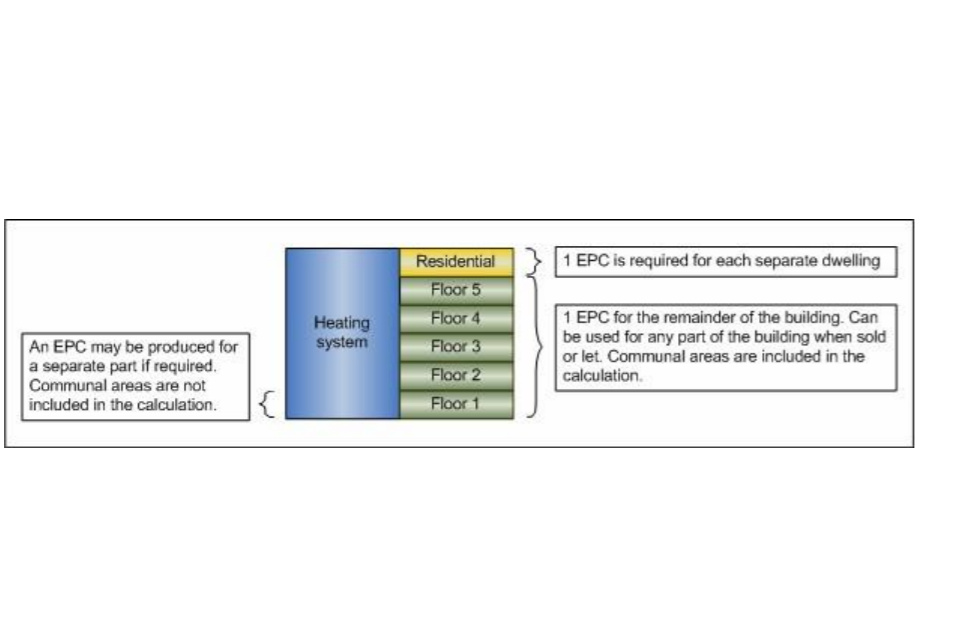
- An EPC may be produced for a separate part if required. Communal areas are not included in the calculation.
- 1 EPC is required for each separate dwelling.
- 1 EPC for the remainder of the building. Can be used for any part of the building when sold or let. Communal areas are included in the calculation.
Block with independent heating system
It is permissible to provide EPCs for each of the individual parts, plus an EPC for the conditioned communal areas when selling or renting out the whole building or to provide one EPC for the whole building.
Each separate dwelling will require its own EPC. The energy calculation for dwellings must be produced using the standard assessment procedure or reduced data standard assessment procedure methodology. The energy assessor carrying out this work must be accredited to carry out an assessment for dwellings.
The non-dwelling part(s) of the building or building unit should be assessed using either simplified building energy model or dynamic simulation model and the energy assessor must be accredited to carry out assessments for non-dwellings. It is appropriate that when any communal areas (including those serving the residential space) are assessed, this is done using simplified building energy model or dynamic simulation model as the methodology used for dwellings, will only be appropriate for dwellings.
An EPC for a single unit within a building may be based on an assessment of a similar representative unit or apartment in the same block.

- 1 EPC for the whole building (excluding any dwellings), only if sold or rented out as a whole building. Communal areas would be included in EPC. EPC can subsequently be used for whole building only.
- 1 EPC is required for each separate dwelling.
- 1 EPC for each separate building unit when sold or rented out. Communal areas are not included in the calculation.
Shop with dwellings above
In the example below the residential dwelling space above the shop has separate access and is clearly designed to be used as a dwelling separate from the conduct of business in the shop, whether the two parts are sold or let together or separately. In this case the residential space should have its own EPC using the standard assessment procedure or reduced data standard assessment procedure methodology as appropriate.
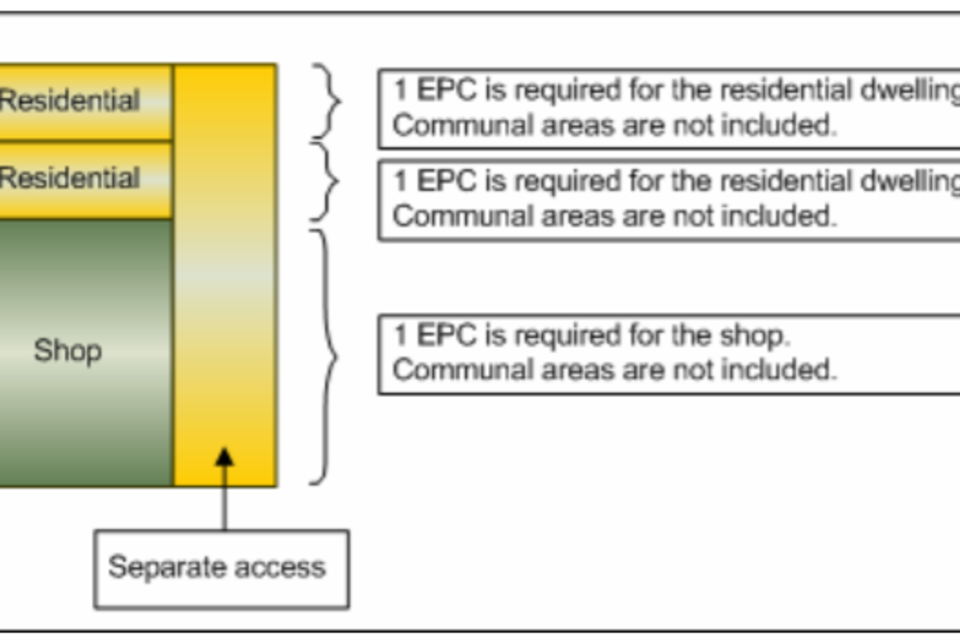
- 1 EPC is required for the residential dwelling. Communal areas are not included.
- 1 EPC is required for the shop. Communal areas are not included.
Shop with residential space above
In the example below, the residential space above the shop can only be accessed via the shop. In this case the upper part is not designed or altered for use as a separate dwelling and should, therefore, be considered and assessed with the shop as a single building, for which the simplified building energy model methodology will be more appropriate.
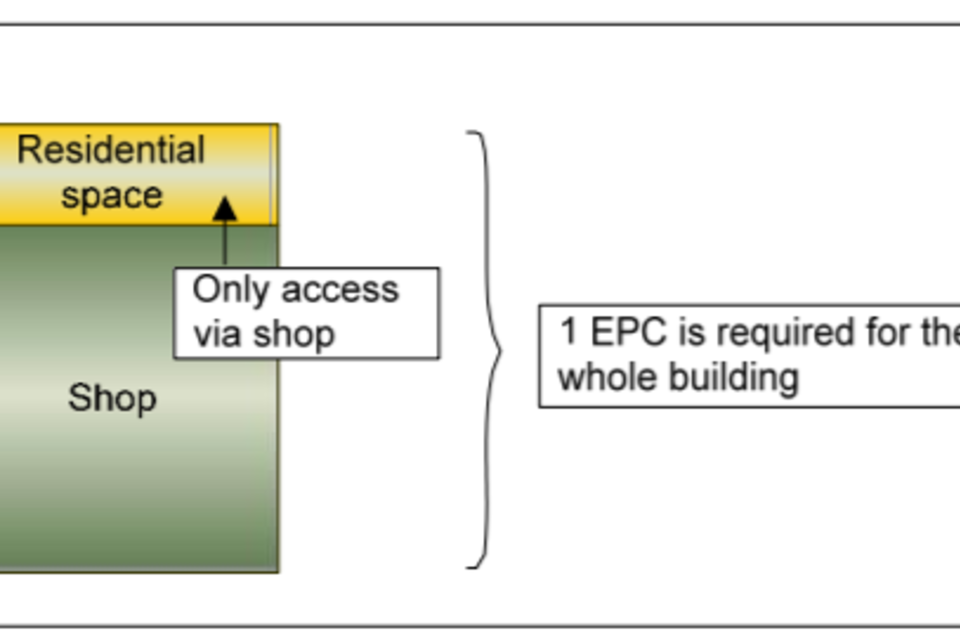
- 1 EPC is required for the whole building.
Commercial or industrial building with significant living accommodation
In the example below, the shop is formerly a room in a dwelling. If the building is subsequently sold or let and could be used as a dwelling it should be assessed as a dwelling using the standard assessment procedure or reduced data standard assessment procedure methodology as appropriate. This is where the living accommodation is a significant proportion (i.e. more than half) of the total area of the building.
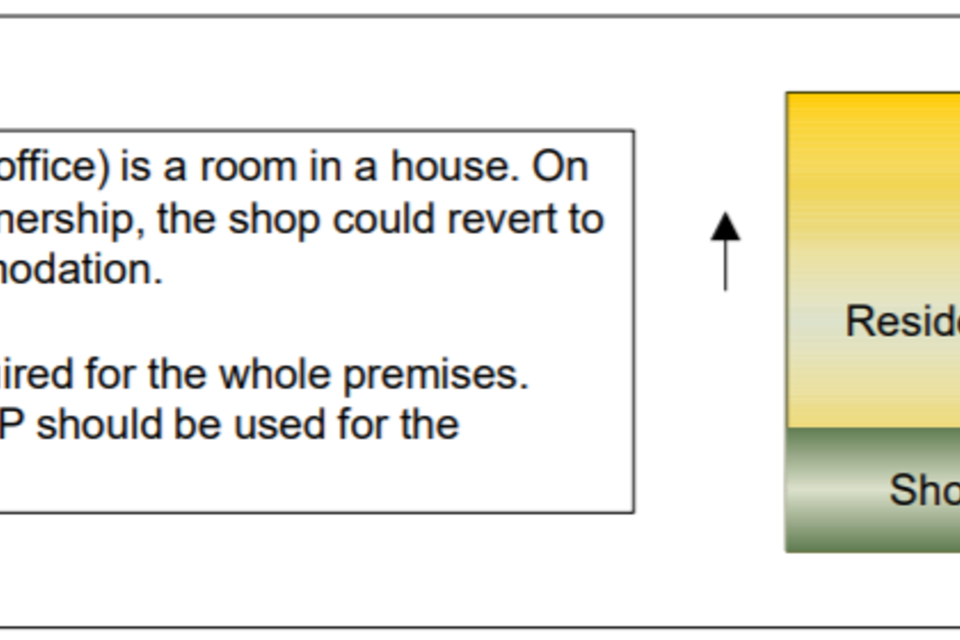
- The shop (or office) is a room in a house. On change of ownership, the shop could revert to living accommodation.
- 1 EPC is required for the whole premises. SAP or RdSAP should be used for the assessment.
Shopping centre, retail units and concourses
An EPC for a single unit may in all cases be based on an assessment of a similar representative unit in the same block).
Centre with common heating systems and conditioned communal space

- EPCs may be produced for a separate part if required. Communal conditioned space is not included in the calculation.
- 1 EPC for the whole building. Communal conditioned space is included in the calculation.
- The EPC can be used for the whole building or any part of the building being sold or let.
If, unlike in the example above, a unit does not directly access the concourse or mall (i.e. it does not share conditioning) and it does not have its own heating or the ability to have its own heating, then it will not require an EPC as it will not be considered to be a building for the purposes of the regulations.
Centre with common heating systems and unconditioned communal space
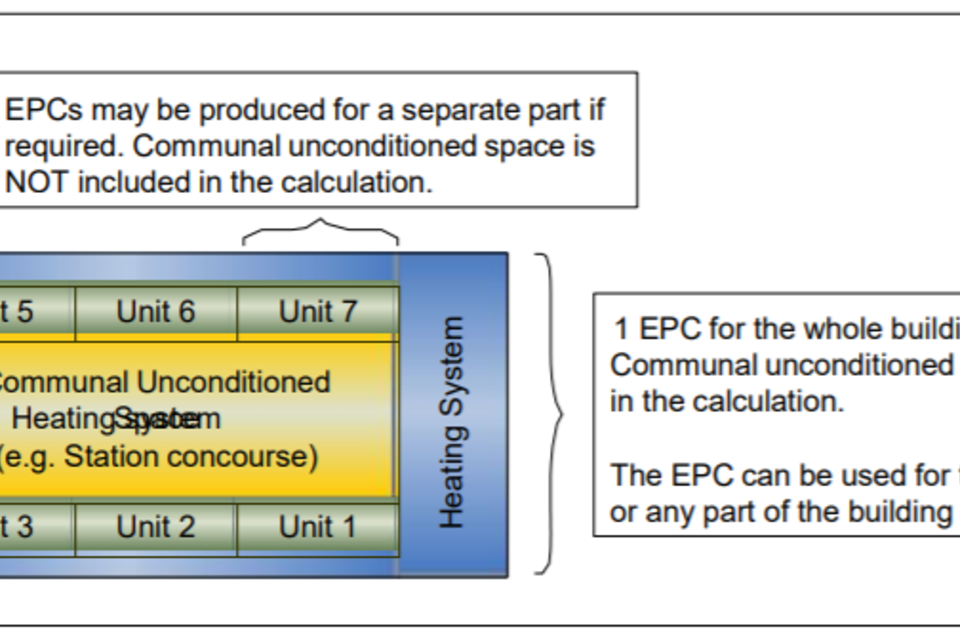
- EPCs may be produced for a separate part if required. Communal unconditioned space is not included in the calculation.
- 1 EPC for the whole building. Communal unconditioned space is included in the calculation.
- The EPC can be used for the whole building or any part of the building being sold or let.
Centre with independent heating systems
In examples below, it is permissible to provide EPCs for each of the individual units, plus an EPC for the conditioned communal areas when selling or renting out the whole building or provide one EPC for the whole building.
Centre with conditioned communal space
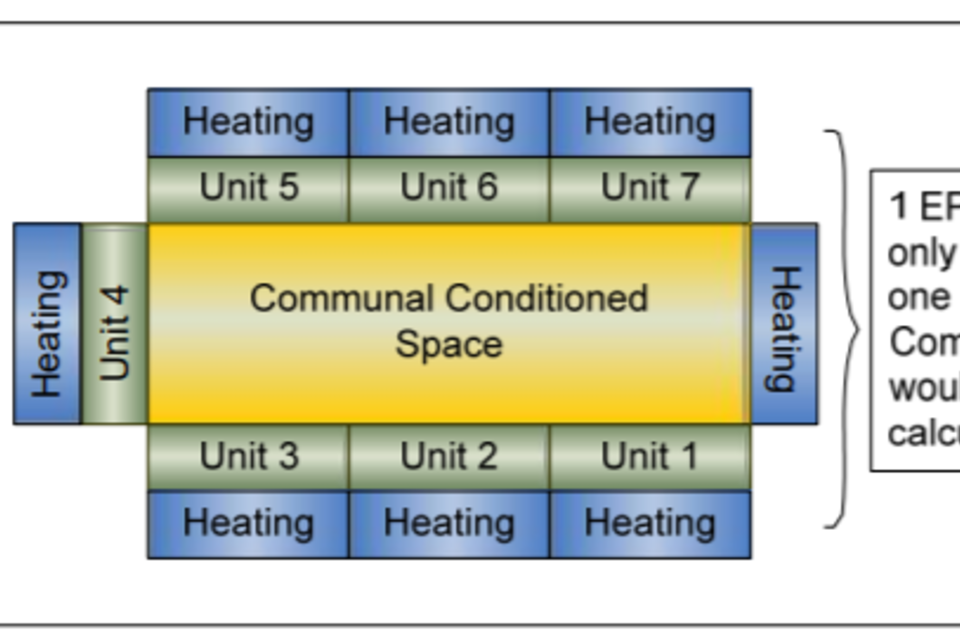
- 1 EPC for each unit when sold or let. Communal conditioned space would not be included in the calculation.
- 1 EPC for the whole building only if it is being sold or let as one building. Communal conditioned space would be included in the calculation.
Centre with unconditioned communal space
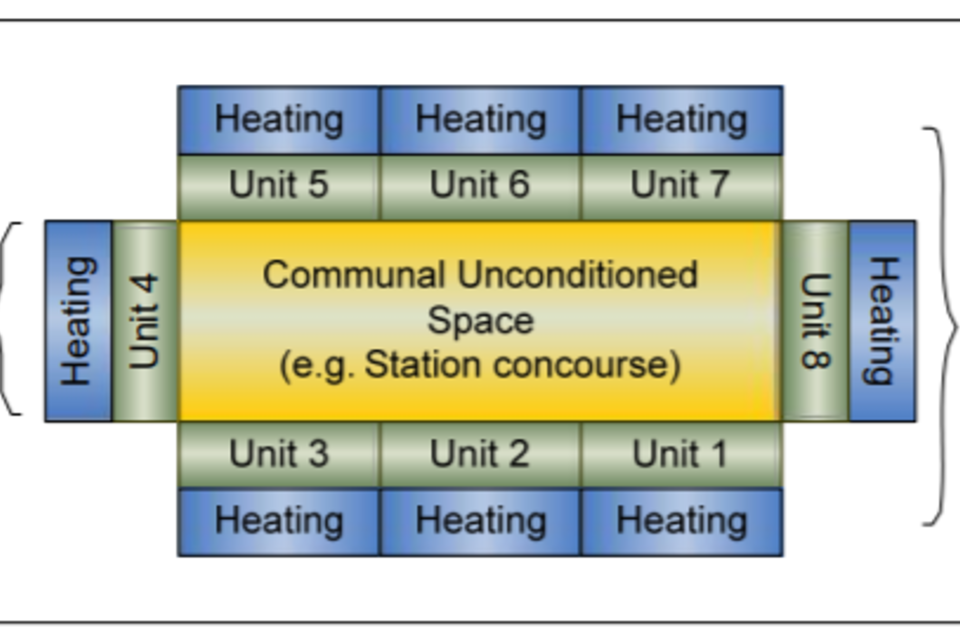
- 1 EPC for each unit when sold or let. Communal unconditioned space would not be included in the calculation.
- 1 EPC for the whole building only if it is being sold or let as one building. Communal unconditioned space would be included in the calculation.
Industrial units in blocks
Stand-alone buildings or building units (i.e. those which are entirely detached and not connected to another building or building unit) with a total useful floor are of less than 50m2, will not require an EPC.
Units with a common heating system

- EPCs may be produced for a separate part if required.
- 1 EPC for all the units (covering office and / or any other activities within the unit) can be used for any unit when sold or let.
Units with independent heating systems
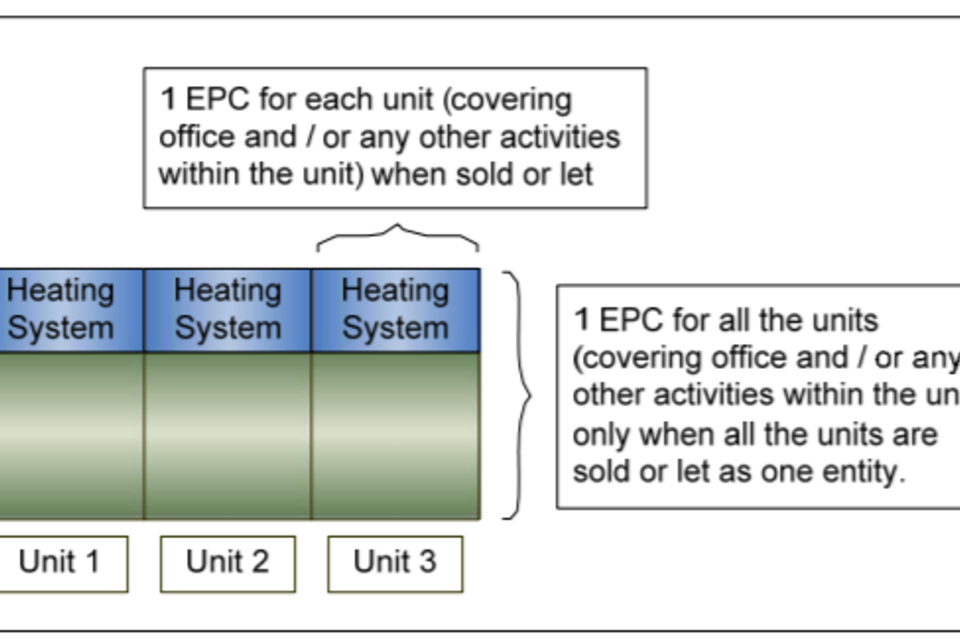
- 1 EPC for each unit (covering office and / or any other activities within the unit) when sold or let.
- 1 EPC for all the units (covering office and / or any other activities with in the unit) only when all the units are sold or let as one entity.
It is permissible to provide EPCs for each of the individual parts, plus an EPC for the conditioned communal areas when selling or letting the whole building or provide one EPC for the whole building.
Units with a variety of heating systems and both conditioned and unconditioned space

- Unit 1 (conditioned space and office): 1 EPC for unit 1 covering office + rest of the unit space.
- Unit 2 (unconditioned space): No EPC required for unit 2.
- Unit 3 (unconditioned space and office): 1 EPC is required for unit 3 which would reflect the conditioned space – in this case the office. The unconditioned space is included in the calculation.
It is permissible in this example to provide EPCs for each of the individual parts, plus an EPC for the conditioned communal areas when selling or letting the whole building or provide one EPC for the whole building.
Modifications to a building
If a building is modified so that it will have more or fewer parts that are designed to be used separately, and the modification includes the provision or extension of any of the fixed services for heating, hot water, air conditioning or mechanical ventilation, then an EPC must on completion of the work be provided to the owner of the building by the person carrying out the work.
An internal refit with new heating, hot water, air conditioning or mechanical ventilation etc., would not trigger the requirement for an EPC, unless the building were also converted so as to comprise more or fewer parts for separate use. Any refit will, however, be subject to such of the Building Regulations as are applicable to the work.
Buildings with extended capacity but with no parts added or removed

- Building has been extended but no separate part(s) added or removed = No EPC required. Work may need to comply with Building Regulations.
Buildings with extended capacity and newly divided into more or fewer parts with extended fixed services

- Building has been extended with a new separate part added and provision made for heating / mechanical ventilation / air conditioning or hot water = EPC is now required for the building.
Buildings with an internal refit
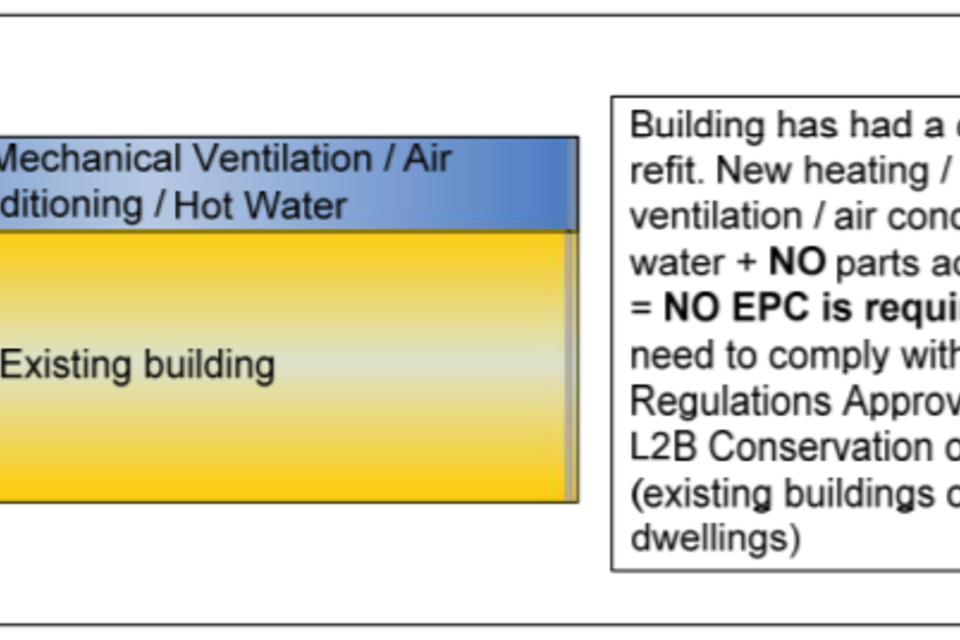
- Building has had a complete internal refit. New heating / mechanical ventilation / air conditioning or hot water + no parts added or removed = No EPC is required. Work may need to comply with Building Regulations Approved Document L2B Conservation of fuel and power (existing building other than dwellings).
In the case above, there is no requirement for an EPC. However where the accommodation has been renovated e.g. upgraded heating or change of use, it would be preferable to have an updated EPC, even though not required.
Building converted into more or fewer parts
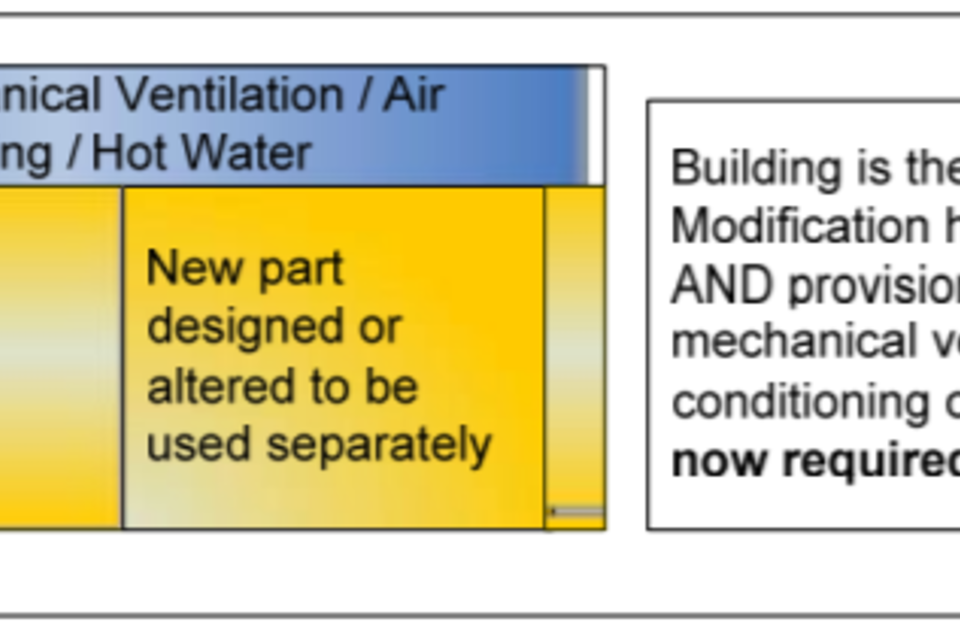
- Building is the same size. Modification has created a new part and provision made for heating / mechanical ventilation / air conditioning or hot water = EPC is now required for the building.
In this example the building is the same size but has more or fewer parts designed or altered to be used separately, and the modification includes the provision or extension of heating / hot water / air conditioning or mechanical ventilation. It now requires an EPC.
Shell and core buildings
For shell and core buildings not all the services will be installed (especially heating, mechanical ventilation and air conditioning) at the point where the building is sold or rented out.
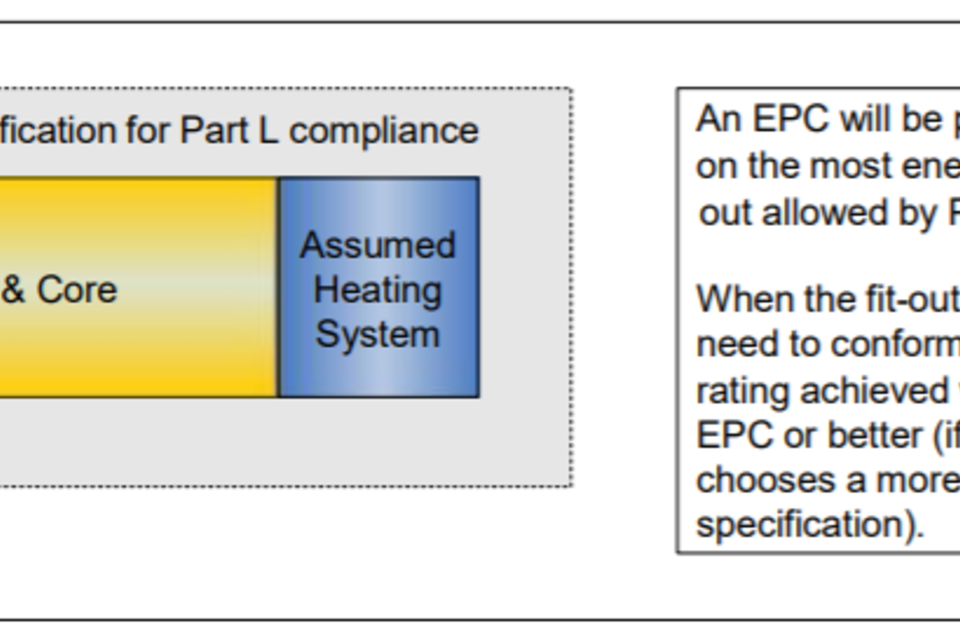
- An EPC will be provided based on the most energy intensive fit-out allowed by Part L.
- When the fit-out is done it will need to conform to Part L. The rating achieved will be as the EPC or better (if the tenant chooses a more energy efficient specification.
In the case of building units that are let as bare structures without services at all, but where they will be fitted out and there is the expectation that energy will be used to condition the indoor climate, an EPC should be provided.
The EPC should be based on the maximum design fit-out specification as used for compliance with Part L of the Building Regulations (in respect of the building’s use class in planning legislation). Part L ensures that building work conforms to current energy performance standards.
Where insufficient information is supplied (i.e. in this case there are no services installed), Part L defaults to the worst energy rating allowed under Part L. Therefore, the most energy intensive fixed services fit-out allowed under Part L will be assumed. Any subsequent fit-out will need to comply with Part L of the Building Regulations. The services installed will either be as assumed or more energy efficient if the tenant chooses a more energy efficient specification.